
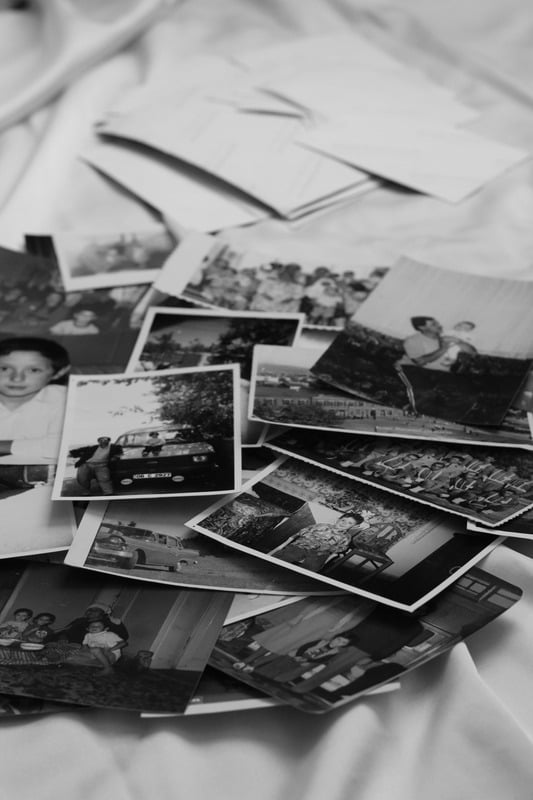
You are have stories that nobody else has. And one day, without any warning, those stories could simply be gone.
This isn’t something people like to dwell on. But in my years of helping families through downsizing and later life transitions, I have sat with so many people who wish they had asked more questions – and with older people who wish someone had thought to ask.
It’s not too late to start!
Family history isn’t just names and dates. It’s the reason your grandmother came to England, the job your grandfather did during the war, the house your mother grew up in, the relative nobody talks about. It’s texture and identity. It tells younger generations something about who they are and where they come from.
Children and grandchildren may not seem interested right now. But they will be. And by then, the person who held the answers may no longer be here to give them. The amount of times I end up looking at photos with clients, and they have no idea who is in them – do what you can to change this!
A few ideas to get started:
- Ask, and record. Sit down with an older relative and ask them about their childhood, their parents, their memories. Use your phone to record the conversation – with their permission. Even ten minutes is precious.
- Write it down. Encourage an older family member to jot down memories, however brief. A notebook kept by the bed works well – thoughts often come at quiet moments.
- Go through photos together. Old photographs are a wonderful prompt. Who is that? Where was this taken? What were they like? Write the answers on the back, or in a notebook alongside.
- Use a simple family tree. Free tools like Ancestry or even a hand-drawn chart can give structure to what you find out – and spark more questions.
Remember, documents can tell you facts. Only people can tell you what it felt like. The smell of a grandparent’s kitchen. What your great-aunt was really like. Why the family moved, or stayed, or fell out. These details live only in memory – and memory is fragile.
If you are the older person reading this, please don’t assume your family knows your story. They don’t. And they would love to.
If you are the younger person, don’t wait for the right moment. Ask now, over a cup of tea, on a car journey. The conversation might surprise you.
If you’d like some help thinking about how to capture and organise family history and important documents, please do contact us, we’d love to help.